
Best Commercial Ice Maker for Restaurants in Saudi Arabia | 2026 Guide
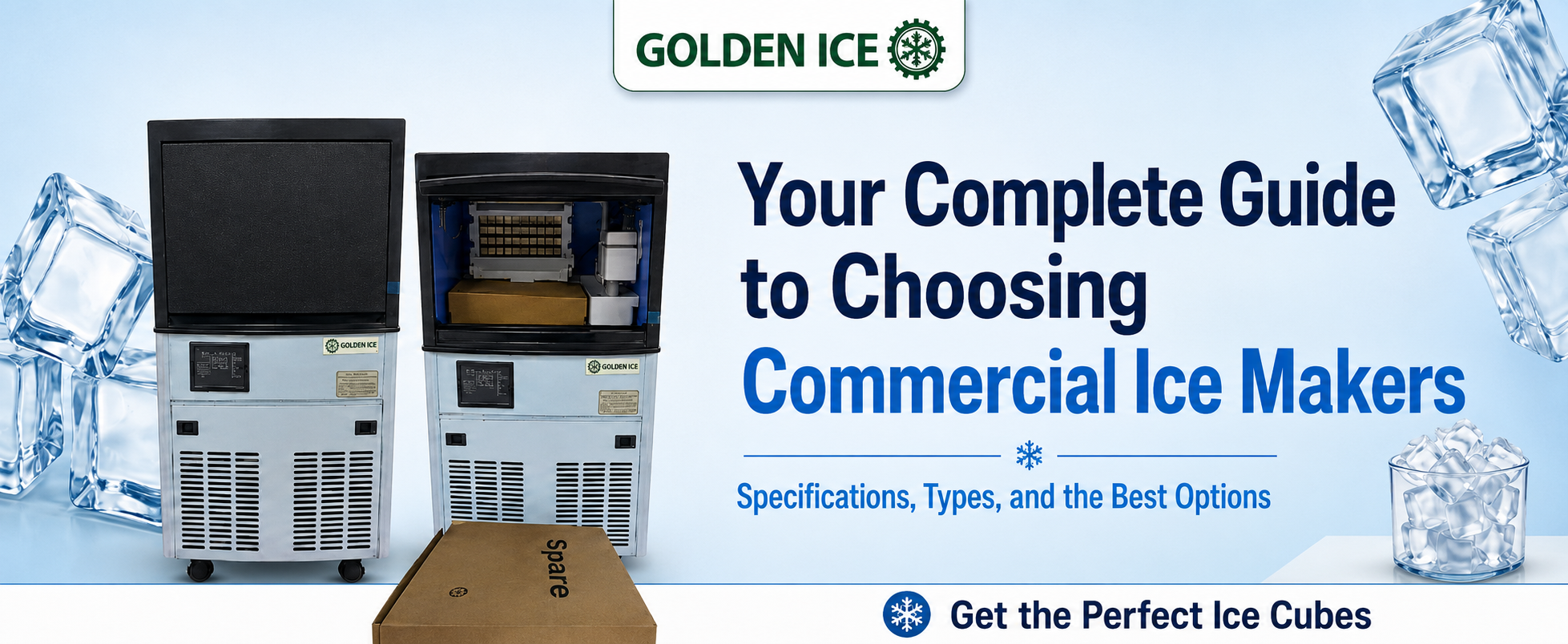
Best Commercial Ice Maker for Restaurants in Saudi Arabia: 2026 Buying Guide
Every summer, restaurants and cafés across Saudi Arabia face the same challenge: demand for cold drinks rises, while an undersized ice machine struggles to keep up.
Choosing the right commercial ice maker in Saudi Arabia helps maintain a steady ice supply during busy hours, reduce unnecessary operating costs, and avoid putting excessive pressure on the machine.
In this guide, you will learn how commercial ice makers work, the main types available, how to choose the right production capacity, expected prices, maintenance requirements, and the most common mistakes to avoid when buying an ice maker for your restaurant or café.
If you already know the capacity you need, you can explore Golden Ice Store’s range of commercial ice makers for restaurants, cafés, hotels, and central kitchens.
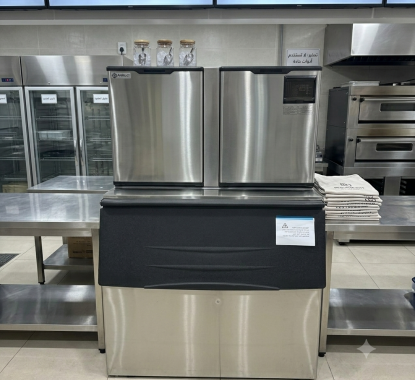
What Is a Commercial Ice Maker and Why Does Your Restaurant Need One?
A commercial ice maker is a refrigeration machine designed to produce large quantities of ice continuously throughout the day.
Unlike a household refrigerator or small domestic ice maker, commercial machines are built for higher production volumes, longer operating hours, and the demanding conditions of professional kitchens.
Restaurants and cafés use ice for several purposes, including:
- Cold drinks and juices.
- Coffee and specialty beverages.
- Seafood displays.
- Buffets.
- Food preparation.
- Hotels and catering operations.
- Central kitchen production lines.
The main difference between domestic and commercial ice makers comes down to three factors:
- Daily production capacity, usually measured in kilograms per 24 hours.
- Durability, as commercial components are designed for heavy use.
- Serviceability, because professional machines require regular cleaning and maintenance.
For restaurants, cafés, hotels, and other foodservice businesses, a reliable ice maker is an important part of daily kitchen operations.
How Does a Commercial Ice Machine Work?
Understanding how a commercial ice machine works can make it easier to choose the right model and maintain it correctly.
Most commercial ice makers operate using a refrigeration cycle similar to a refrigerator.
Water passes over a refrigerated surface or mold, where it freezes into the required shape. Once the freezing cycle is complete, the machine releases the ice automatically into a storage bin.
Depending on the model, the machine may produce cubes, flakes, hollow ice, crushed ice, or other shapes.
An electronic control system manages the freezing and harvesting cycles. Many machines also stop automatically when the storage bin becomes full and restart when the ice level drops.
Ice quality and machine performance can be affected by several factors, including:
- Water quality.
- Water filtration.
- Compressor efficiency.
- Condenser cleanliness.
- Ambient temperature.
- Ventilation.
- Regular maintenance.
Types of Commercial Ice Makers for Restaurants
Choosing the right type of ice can be just as important as choosing the machine brand.
Different businesses use ice in different ways.
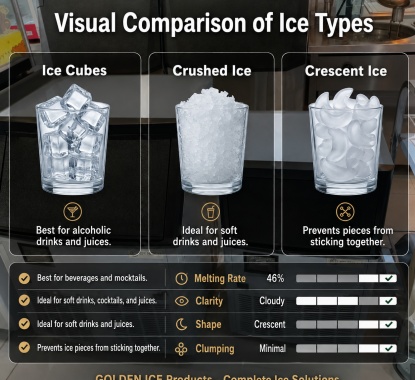
Cube Ice
Cube ice is one of the most common options for restaurants, cafés, and beverage service.
It melts relatively slowly and works well for:
- Soft drinks.
- Juices.
- Iced coffee.
- Table service.
- General restaurant use.
For many restaurants, a cube ice maker is the most practical all-purpose choice.
Flake or Crushed Ice
Flake ice consists of smaller, softer pieces that spread easily around food and products.
It is commonly used for:
- Seafood displays.
- Fish counters.
- Buffets.
- Food presentation.
- Cold food storage.
Because it surrounds products easily, flake ice is especially useful when presentation and surface cooling are important.
Nugget or Hollow Ice
Nugget and hollow ice are popular in beverage-focused businesses.
They can be suitable for:
- Juice shops.
- Smoothies.
- Specialty drinks.
- Cafés.
- Fast-service beverage concepts.
The ideal choice depends on your menu and how customers consume the ice.
Ice for Industrial and High-Volume Applications
Hotels, catering companies, large restaurants, and central kitchens may require larger machines or modular ice systems designed for high daily production.
In these environments, production capacity and storage are usually more important than compact size.
How to Choose the Best Commercial Ice Maker for Your Restaurant
The best commercial ice maker for restaurants is not necessarily the most expensive or largest model.
It is the machine that matches your actual operation.
Consider the following factors before buying.
1. Daily Ice Production Capacity
Start by estimating how much ice your business uses during a normal day and during peak periods.
The machine’s production capacity is normally listed in kilograms per 24 hours.
Buying a machine that is too small can lead to shortages during busy periods.
Buying a machine that is much larger than necessary can increase:
- Purchase cost.
- Electricity consumption.
- Water consumption.
- Space requirements.
Always allow some extra capacity for seasonal demand and peak service periods.
2. Ice Storage Capacity
Production capacity and storage capacity are not the same thing.
A machine may be able to produce a large amount of ice over 24 hours but have a relatively small storage bin.
A suitable storage bin helps your restaurant build up ice before peak service and reduces the risk of running out during busy periods.
3. Required Ice Type
Choose the ice according to your menu.
For example:
- Restaurants and cafés: cube ice.
- Seafood restaurants: flake or crushed ice.
- Juice and smoothie shops: cube, hollow, or nugget ice.
- Hotels and buffets: different ice types depending on the application.
4. Available Installation Space
Check the dimensions of the machine before ordering.
Commercial ice makers need enough room for:
- Water connections.
- Drainage.
- Electrical supply.
- Ventilation.
- Maintenance access.
Avoid installing the machine directly beside ovens, fryers, or other major heat sources whenever possible.
5. Water and Electricity Consumption
An ice machine operates regularly throughout the day, so water and energy efficiency can affect long-term operating costs.
Compare machines based on the amount of ice they produce rather than looking only at their total power rating.
6. Noise Level
Noise may not be a major issue in a large closed kitchen, but it matters more in:
- Small cafés.
- Open kitchens.
- Beverage counters near customers.
- Compact kiosks.
Check the installation location before choosing your model.
7. Spare Parts and Maintenance in Saudi Arabia
This is one of the most important buying factors.
Before purchasing an imported machine, check whether:
- Spare parts are available.
- Technical support is available locally.
- Maintenance can be provided.
- The supplier offers a warranty.
A cheaper machine can become expensive if the restaurant has to wait a long time for replacement parts after a breakdown.
Quick Commercial Ice Maker Capacity Guide
The following table provides a general starting point for selecting a machine.
| Business Type | Approximate Daily Production | Suggested Ice Type |
|---|---|---|
| Small café or juice kiosk | 25–60 kg/day | Cube or hollow ice |
| Medium restaurant, 50–100 seats | 60–130 kg/day | Cube ice |
| Large or seafood restaurant | 130–300 kg/day | Cube and/or flake ice |
| Hotel or central kitchen | 300+ kg/day | Depends on operation |
These figures are only general estimates.
Actual demand depends on your menu, number of customers, business hours, beverage sales, seasonal demand, and peak service periods.
Commercial Ice Maker Prices in Saudi Arabia
The price of a commercial ice maker in Saudi Arabia varies according to production capacity, brand, compressor, construction materials, storage capacity, warranty, and after-sales service.
At Golden Ice Store, the current English ice-maker category includes machines ranging from compact restaurant models to high-production units exceeding 600 kg per day.
A general price guide based on the current Golden Ice range is:
| Category | Approximate Capacity | Approximate Price |
|---|---|---|
| Small commercial ice makers | 25–36 kg/day | SAR 2,600–3,450 |
| Café ice makers | 44–60 kg/day | SAR 4,250–7,100 |
| Medium restaurant ice makers | 67–100 kg/day | SAR 6,000–10,900 |
| Large commercial ice makers | 127–200 kg/day | SAR 8,750–15,550 |
| Industrial ice makers | 225–682 kg/day | SAR 14,999–24,999 |
Prices should be checked before ordering because product availability, promotions, specifications, and supplier pricing can change. Golden Ice’s current English category lists multiple available capacities and prices across this range.
What Determines the Price of a Commercial Ice Maker?
Several factors affect the final price.
Daily Production Capacity
Higher-capacity machines generally cost more because they require larger refrigeration systems and stronger components.
Brand and Country of Manufacture
Commercial machines are available from different manufacturers and countries, and pricing can vary significantly between brands.
Compressor Quality
The compressor is one of the main components of an ice machine.
Its quality and specifications can influence:
- Cooling performance.
- Reliability.
- Energy use.
- Machine lifespan.
Construction Quality
Commercial kitchens are demanding environments.
Machines made with durable stainless steel and components designed for professional use may cost more initially but can provide better long-term durability.
Storage Capacity
Some self-contained ice makers have integrated storage bins, while larger modular systems may require a separate ice storage bin.
Warranty and After-Sales Support
A strong warranty and access to local maintenance can add value beyond the purchase price.
Shipping and Installation
Large commercial or industrial machines may require specialized delivery and installation.
Advantages of a Commercial Ice Maker
Choosing the right restaurant ice maker provides several benefits.
- Continuous ice production during operating hours.
- Better support for beverage service.
- Less dependence on buying packaged ice.
- More control over ice handling and cleanliness.
- Convenient production inside the restaurant.
- Ability to select the correct ice type for the menu.
- Better preparation for peak demand.
Possible Disadvantages of Choosing the Wrong Machine
Commercial ice makers can also create problems when the model is not suitable for the business.
Potential issues include:
- Higher electricity or water consumption from an oversized machine.
- Ice shortages from an undersized machine.
- Maintenance costs.
- Insufficient ventilation.
- Limited installation space.
- Difficulty finding replacement parts.
- Frequent breakdowns when the machine is constantly pushed beyond its intended capacity.
Correct sizing before purchase can prevent many of these problems.
Common Mistakes When Buying a Commercial Ice Maker
Buying a Machine That Is Too Small
Some restaurant owners choose a smaller model to reduce the initial purchase cost.
However, if the machine cannot meet peak demand, the restaurant may need to buy additional ice or operate the machine almost continuously.
Choose capacity according to real demand rather than price alone.
Ignoring Water Quality
Water quality affects both the machine and the finished ice.
Mineral buildup may reduce water flow, affect internal components, and increase maintenance requirements.
A suitable filtration system can therefore be an important part of the installation.
Poor Ventilation
Commercial ice machines release heat during operation.
Installing an air-cooled machine in a tight or poorly ventilated location can reduce efficiency.
Follow the manufacturer’s clearance and ventilation requirements.
Installing the Machine Near Heat Sources
An ice maker should not be placed directly beside a commercial oven, grill, or fryer if another suitable location is available.
Higher surrounding temperatures can make the refrigeration system work harder.
Ignoring Spare Parts Availability
Before buying, check whether spare parts and qualified maintenance are available in Saudi Arabia.
This can significantly reduce downtime if the machine develops a fault.
Commercial Ice Maker Maintenance Tips
Regular maintenance helps keep a commercial ice maker working efficiently.
Clean the Machine Regularly
Follow the manufacturer’s cleaning schedule for:
- Internal surfaces.
- Water system.
- Ice storage bin.
- Filters.
- Condenser.
Do not wait until ice quality or production begins to fall before cleaning the machine.
Check the Water Drain
A blocked or poorly installed drain can cause operational problems.
Inspect the drainage system periodically and make sure water can leave the machine correctly.
Clean the Storage Bin
The ice storage bin should be emptied and cleaned regularly as part of the restaurant’s hygiene routine.
Inspect the Water Filter
Replace or service the water filter according to its specifications and local water conditions.
Schedule Professional Maintenance
A qualified technician can inspect refrigeration components, electrical systems, the compressor, and other internal components that should not be serviced by restaurant staff.
Avoid Frequent On-Off Cycling
Repeatedly switching the machine off and on over short periods can place unnecessary stress on refrigeration components.
Use the machine according to the manufacturer’s operating instructions.
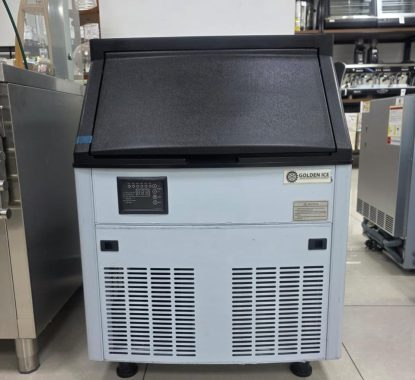
Best Commercial Ice Makers from Golden Ice
Golden Ice Store provides a wide range of commercial ice makers in Saudi Arabia for restaurants, cafés, hotels, juice shops, and central kitchens.
The current product category includes different production capacities, including compact 25–36 kg models, mid-sized machines, and high-capacity units reaching 682 kg per day.
This makes it easier to select a machine according to:
- Daily production needs.
- Type of business.
- Available kitchen space.
- Budget.
- Required ice type.
- Expected peak demand.
For example, Golden Ice currently lists commercial machines such as 30 kg cube ice makers, 50–60 kg models, 67–95 kg machines, and larger units designed for restaurants and high-volume operations.
Explore the Golden Ice commercial ice maker range before choosing the final capacity for your business.
Golden Ice Branches and Support in Saudi Arabia
Golden Ice operates locations in several Saudi cities, including Riyadh, Dammam, Jeddah, Madinah, and Khamis Mushait, according to the English store information.
Businesses can use Golden Ice for:
- Restaurant and café equipment.
- Commercial ice makers.
- Product consultation.
- Spare-parts support.
- Maintenance requests.
If you are setting up a restaurant or café and are unsure which ice machine capacity you need, choosing the machine based on your actual daily demand can help prevent both overspending and future ice shortages.
Frequently Asked Questions
How much ice does a medium-sized restaurant need per day?
Actual consumption depends on the restaurant’s menu, number of customers, beverage sales, and operating hours. As a general starting point, a medium restaurant with around 50–100 seats may consider a machine in the 60–130 kg/day range and adjust the final capacity according to actual demand.
What is the difference between cube ice and crushed ice?
Cube ice melts relatively slowly and is commonly used for drinks. Crushed or flake ice spreads more easily around food, making it useful for seafood displays, buffets, and some food-presentation applications.
Does a commercial ice maker consume a lot of electricity?
Energy consumption depends on machine capacity, compressor efficiency, operating hours, ventilation, and the amount of ice produced. Compare models based on both production capacity and energy requirements before buying.
How often should a commercial ice maker be cleaned?
Cleaning frequency depends on the manufacturer’s recommendations, operating conditions, water quality, and how heavily the machine is used. Filters, internal water-contact surfaces, the storage bin, and condenser should all be included in a regular maintenance schedule.
Can I install an ice maker anywhere in a commercial kitchen?
No. The machine needs suitable access to water, drainage, electricity, and ventilation. It should also be positioned according to the manufacturer’s clearance requirements and preferably away from major heat sources.
How long does a commercial ice maker last?
There is no single lifespan for every machine. Equipment quality, daily workload, water quality, ventilation, cleaning, and regular maintenance can all affect how long it remains reliable.
Does a commercial ice maker need a water filter?
A suitable water-filtration system is strongly recommended where water quality or mineral buildup may affect the machine. Always follow the requirements of the specific machine manufacturer.
What is the difference between a self-contained and modular ice maker?
A self-contained model normally combines the ice-making unit and storage bin in one machine.
A modular ice maker separates the production unit from the storage bin, allowing larger businesses to choose production and storage capacities independently.
Do commercial ice makers come with a warranty?
Warranty terms vary by manufacturer, model, and supplier. Review the warranty period, covered components, maintenance requirements, and after-sales service before purchasing.
How do I know if my current ice maker is too small?
Common signs include regularly running out of ice during peak periods, continuously operating the machine without building enough stored ice, or frequently buying extra ice to meet demand.
What is the best commercial ice maker for restaurants in Saudi Arabia?
The best machine depends on the restaurant’s daily ice requirement, menu, ice type, installation space, and available technical support.
For most businesses, the right choice is a commercial ice maker that provides enough capacity for peak demand without being unnecessarily oversized.
Choose the Right Commercial Ice Maker for Your Business
Buying the right commercial ice maker in Saudi Arabia is about more than selecting the highest production capacity.
A good purchasing decision considers daily demand, ice type, storage, water quality, ventilation, energy use, maintenance, warranty, and spare-parts availability.
Golden Ice Store offers commercial ice makers in a wide range of capacities for restaurants, cafés, hotels, juice shops, and central kitchens across Saudi Arabia. The store currently lists models ranging from compact units to machines producing hundreds of kilograms per day.
Explore the Golden Ice ice-maker collection or contact the team for help selecting the right capacity for your business.