
Juice Shop Equipment in Saudi Arabia: 2026 Guide
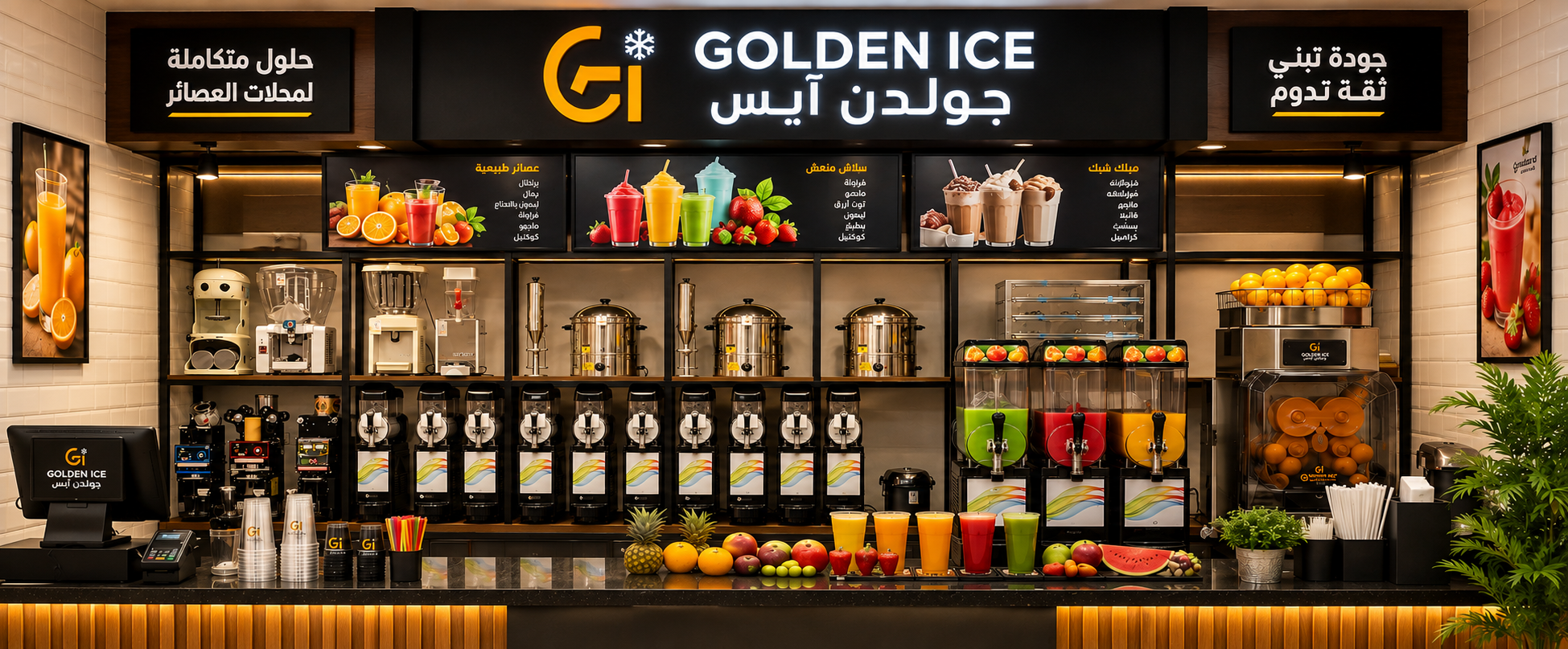
Juice Shop Equipment: Your Complete Guide to Setting Up a Successful Juice Shop in Saudi Arabia
Opening a juice shop may seem like a simple project at first, but its actual success largely depends on choosing the right juice shop equipment in terms of quality, capacity, and operating efficiency.
Many new juice shop owners in Saudi Arabia make the mistake of purchasing equipment without proper planning. This can result in frequent breakdowns, wasted fruit, and slower service during peak hours.
In this guide, we explain everything you need to know about juice shop equipment, including the main equipment types, selection criteria, approximate costs, common mistakes to avoid, and practical advice based on more than 15 years of experience in equipping restaurants, cafés, and juice shops across Saudi Arabia.
What Is the Essential Equipment for a Juice Shop?
The equipment required for a juice shop varies depending on the size of the business, the types of drinks offered, and the expected number of daily customers.
Understanding the purpose of each machine before purchasing can help you set up your business at the lowest possible cost while achieving the highest operating efficiency.
Choosing juice shop equipment should not be based on price alone. It also depends on the size of the shop, the drinks on the menu such as fresh juices, slush drinks, and milkshakes and the expected level of daily demand.
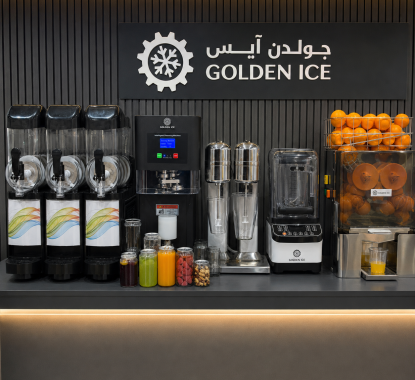
Why Is Choosing the Right Equipment So Important?
The success of any juice shop depends heavily on choosing suitable equipment because service speed, drink quality, and uninterrupted operation are directly connected to the performance of the machines being used.
A single unsuitable machine, such as a blender with a weak motor, can delay orders and cause the business to lose regular customers.
Low-quality equipment may also consume more electricity and require frequent maintenance, increasing monthly operating costs over time.
On the other hand, investing in commercial-grade juice shop equipment provides a longer operating life and reduces downtime, which can directly improve the profitability of the business.
After choosing the appropriate equipment, it is also important to understand how each machine works. Correct operation can help extend the equipment’s service life and reduce unnecessary breakdowns.
How Does Juice Shop Equipment Work?
The operating method varies according to the type of machine:
- Juicers: Use pressure or centrifugal force to separate juice from pulp and peel. They are particularly suitable for citrus fruits such as oranges and lemons.
- Blenders: Use high-speed rotating blades to blend fruit and ice. They are commonly used for mixed juices, smoothies, and frappes.
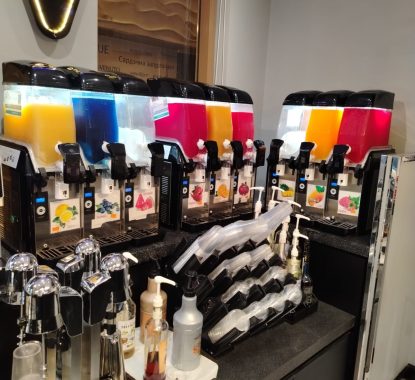
- Slush machines: Contain refrigerated tanks with continuous mixing systems that prevent the mixture from freezing completely and maintain a smooth, icy texture.
- Juice coolers and dispensers: Display and serve pre-prepared juice while keeping it cold throughout the day.
- Cup-sealing machines: Seal cups with plastic film immediately after preparation, helping maintain hygiene and making delivery easier.
Essential Types of Juice Shop Equipment
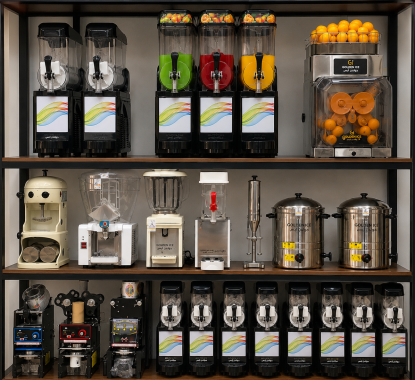
Juice shop equipment includes several machines, each serving a different purpose depending on the drinks offered by the business. The following are the most important machines used by juice shops in Saudi Arabia.
1. Commercial Blenders
The blender is considered the heart of almost every juice shop.
Commercial blenders differ from household blenders because they have stronger motors, often exceeding 1,000 watts. Some models are also equipped with soundproof covers to reduce noise inside the shop.
They are available in different capacities, generally ranging from 1.5 litres to 5 litres, depending on the expected number of orders.
2. Slush Machines
Slush machines are particularly popular in Saudi Arabia because of the hot weather during most of the year.
They are available with one, two, or three tanks. Each additional tank allows the shop to offer more flavours at the same time.
3. Fruit and Orange Juicers
Fruit and orange juicers are used to extract fresh juice quickly and efficiently.
They are available in manual, semi-automatic, and fully automatic versions. The appropriate model depends on the expected number of orders and the required production capacity.
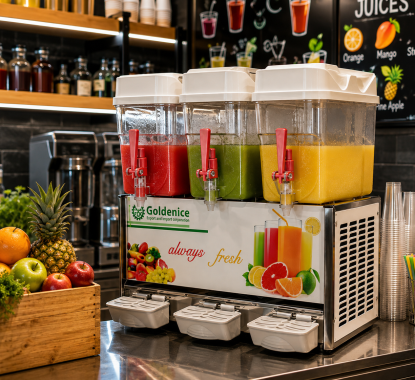
4. Juice Coolers and Display Dispensers
Juice coolers and dispensers are designed to display prepared juices attractively while keeping them cold.
They are available with one, two, or three tanks, with some models offering capacities of up to 25 litres per tank.
5. Juice Cup-Sealing Machines
Cup-sealing machines provide a professional presentation while helping keep drinks hygienic during takeaway and delivery.
They are available in manual, semi-automatic, and fully automatic versions. Fully automatic machines are generally more suitable for shops with high production volumes.
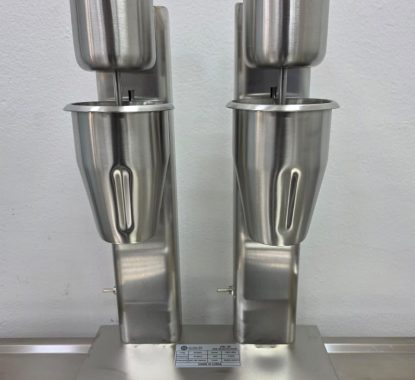
6. Milkshake Machines and Additional Food-Preparation Equipment
Milkshake machines and additional preparation equipment complete the juice shop setup and allow the menu to include milkshakes alongside fresh juices and other cold drinks.
Factors to Consider When Choosing Juice Shop Equipment
When buying juice shop equipment, price should not be the only consideration. Several factors can help you select suitable equipment and achieve a better return on investment:
- Shop size and expected number of daily customers: This determines the number and capacity of machines required.
- Types of drinks on the menu: Decide whether the shop will serve fresh juice only or also offer slush drinks and milkshakes.
- Motor power and body material: Commercial stainless steel is generally more durable and easier to sanitise than plastic.
- Availability of spare parts and local maintenance: Avoid brands that do not have maintenance support or spare parts available in Saudi Arabia.
- Supplier warranty: The warranty should cover the motor and essential components for at least one year.
- Available counter space: Some commercial machines require considerably more space than smaller models.
Advantages and Disadvantages of Industrial and Budget Equipment
| Factor | Industrial Equipment (Heavy Duty) | Budget Equipment |
|---|---|---|
| Service life | Long, often exceeding five years | Average and may require earlier replacement |
| Initial price | Higher | Lower |
| Ability to withstand intensive use | Excellent | Limited |
| Annual maintenance cost | Relatively lower | Higher due to frequent breakdowns |
| Suitable for | Busy shops and multi-branch businesses | Small businesses or initial trials |
Examples of Juice Shop Equipment and Approximate Prices
Juice shop equipment prices vary according to capacity, brand, country of manufacture, and level of automation.
The following are approximate examples of prices for popular commercial machines available in the Golden Ice juice machines section.
| Equipment | Specifications | Approximate Price |
|---|---|---|
| Single-Tank Slush Machine, 12 Litres | One tank with a capacity of 12 litres | SAR 3,550 |
| Double-Tank Slush Machine, 12 Litres | Two tanks, 12 litres per tank | SAR 5,900 |
| Italian Three-Tank Slush Machine, 10 Litres | Three tanks, Italian model | SAR 12,800 |
| Automatic Self-Feeding Orange Juicer | Fully automatic self-feeding system | SAR 4,990 |
| Three-Tank Acrylic Juice Dispenser, 18 Litres | Three display and cooling tanks | SAR 3,100 |
| Golden Ice Red Juice Blender, 2.5 Litres | 2.5-litre capacity | SAR 360 |
| Fully Automatic Juice Cup-Sealing Machine | Fully automatic cup sealing | SAR 2,700 |
Factors Affecting Juice Shop Equipment Prices
Several factors influence the price of juice shop equipment:
- Number of tanks and capacity: Each additional tank or increase in capacity generally increases the price.
- Country of manufacture and brand: Italian and European models are usually more expensive than Asian models.
- Level of automation: Fully automatic machines, such as self-feeding juicers and automatic cup-sealing machines, cost more than manual or semi-automatic versions.
- Seasonal offers and discounts: Suppliers may offer discounts during special occasions, sometimes reaching 30% or more.
- Shipping and installation: Some orders may include free shipping, while others require an additional delivery charge.
Always request an updated quotation from the supplier before making a final purchasing decision because prices may change.
Common Mistakes When Buying Juice Shop Equipment
Many new business owners make mistakes when purchasing juice shop equipment, resulting in higher costs or reduced operating efficiency. Common mistakes include:
- Purchasing equipment with a lower capacity than the business requires, forcing the machine to operate continuously and reducing its service life.
- Failing to confirm the local availability of spare parts before purchasing.
- Ignoring energy consumption, particularly for equipment that operates throughout the day, such as slush machines and juice coolers.
- Choosing equipment based only on the lowest price without considering material quality or warranty coverage.
- Failing to allocate a budget for regular maintenance from the beginning.
Professional Tips for Setting Up a Successful Juice Shop
- Begin with a focused drinks menu and select equipment based on that menu instead of purchasing every available machine at once.
- Choose reliable brands that provide maintenance services within Saudi Arabia to reduce downtime.
- Train employees to operate equipment correctly to extend its service life.
- Clean all components that come into direct contact with juice every day to prevent bacterial buildup.
- Review a basic feasibility study before expanding so you can prioritise essential equipment.
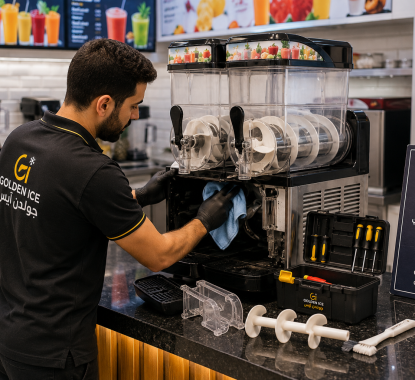
A technician performing maintenance and cleaning on a slush machine at a juice shop.
Juice Shop Equipment Maintenance
Regular maintenance helps preserve operating efficiency, reduce unexpected breakdowns, and extend the service life of juice shop equipment.
A consistent maintenance schedule should include:
- Cleaning blades and tanks daily after closing.
- Inspecting motor belts and motors periodically in slush machines and blenders.
- Removing deposits from display refrigerators and juice coolers every week.
- Scheduling preventive maintenance with a specialised technician every three to six months, depending on usage.
Best Juice Shop Equipment by Business Type
There is no single equipment list suitable for every business. The best selection depends on the shop’s size, expected number of daily customers, and the drinks offered.
- Small shops and kiosks: A budget blender with a capacity of 1.5 to 2.5 litres and a manual or semi-automatic orange juicer.
- Medium-sized cafés: A soundproof blender, a double-tank slush machine, and a double-tank display cooler.
- Restaurants and multi-branch businesses: Multiple industrial blenders, a three-tank slush machine, an automatic self-feeding juicer, and an automatic cup-sealing machine.
- Central kitchens: High-output equipment suitable for near-continuous operation and easy regular maintenance.
Requirements for Opening a Juice Shop in Saudi Arabia
In addition to choosing suitable juice shop equipment, businesses must comply with the applicable regulations and requirements in Saudi Arabia to operate legally and safely.
You can review food-safety information through the Saudi Food and Drug Authority and check municipal requirements or apply for the relevant commercial licence through the Balady platform.
Following these requirements from the beginning, together with choosing high-quality equipment, can help the business operate efficiently and reduce future operating problems.
Contact Golden Ice
If you are looking for suitable juice shop equipment or planning to open a new juice shop or upgrade an existing business, you can browse the Golden Ice juice machines section to view the latest prices and specifications.
You can also contact the Golden Ice sales team for a free consultation to help you choose equipment that matches the size of your business and your available budget.
Frequently Asked Questions
1. What is the most important equipment required when opening a juice shop?
A commercial blender, an orange juicer, and a juice cooler or display dispenser are considered the basic machines required by most juice shops.
2. How much does it cost to equip a small juice shop?
The cost varies according to the number and type of machines and the required level of automation. It is best to request a customised quotation based on the intended drinks menu.
3. What is the difference between a slush machine and a juice cooler?
A slush machine turns the liquid into a semi-frozen, icy drink using continuous cooling and mixing. A juice cooler only keeps liquid juice cold without freezing it.
4. Should I purchase imported or locally manufactured equipment?
Material quality and the availability of local maintenance are more important than the country of manufacture alone.
5. How often should juice shop equipment be maintained?
Equipment should be cleaned daily, while comprehensive preventive maintenance should generally be carried out every three to six months, depending on usage.
6. Do slush machines consume a large amount of electricity?
Slush machines often operate throughout the day. It is therefore advisable to select an energy-efficient model with good thermal insulation around the tanks.
7. What blender capacity is best for a medium-sized juice shop?
A blender capacity of approximately 1.8 to 2.5 litres is suitable for most medium-sized shops. A larger capacity may be selected when preparing larger orders.
8. Can I buy used equipment to reduce the initial cost?
Yes, used equipment may help reduce the initial investment. However, it should be carefully inspected, particularly the motor, tanks, and main operating components.
9. What documents are required to open a juice shop in Saudi Arabia?
The requirements generally include a valid commercial registration, a municipal commercial licence, and the approvals applicable to the selected activity. Exact requirements should be confirmed through the official Balady platform.
10. Do juice shop equipment suppliers provide after-sales service?
Reliable suppliers such as Golden Ice provide equipment warranties and maintenance services. After-sales service should always be confirmed before purchasing from any supplier.
Golden Ice Branches
- Riyadh: Prince Abdulaziz bin Musaed bin Jalawi Street, Al-Sulaymaniyah 2261
- Dammam: Prince Saud bin Abdulaziz Road
- Jeddah: Al-Tahlia Street, Al-Faisaliyah
- Madinah: Al-Hizam Street
All prices mentioned in this article are approximate and were taken from the Golden Ice store at the time of writing. Prices may change according to available promotions, so always check the final price directly on the relevant product page or contact the sales team.
If you are planning to open a new juice shop or upgrade your current business, Golden Ice provides a wide range of commercial juice shop equipment, together with free consultations to help you select suitable machines according to your business size and budget.
To view the latest specifications and prices or request a customised quotation, contact the Golden Ice sales team or visit your nearest branch in Saudi Arabia.